Why AI-Powered Geotechnology?
Traditional geological monitoring depends heavily on expensive LiDAR systems and manual field surveys that can cost tens of thousands of euros per campaign, require specialized operators, and only provide periodic snapshots of terrain conditions. Meanwhile, geological hazards, from landslides in the Apennines to seismic tremors across southern Italy, demand continuous, affordable, and scalable monitoring solutions.
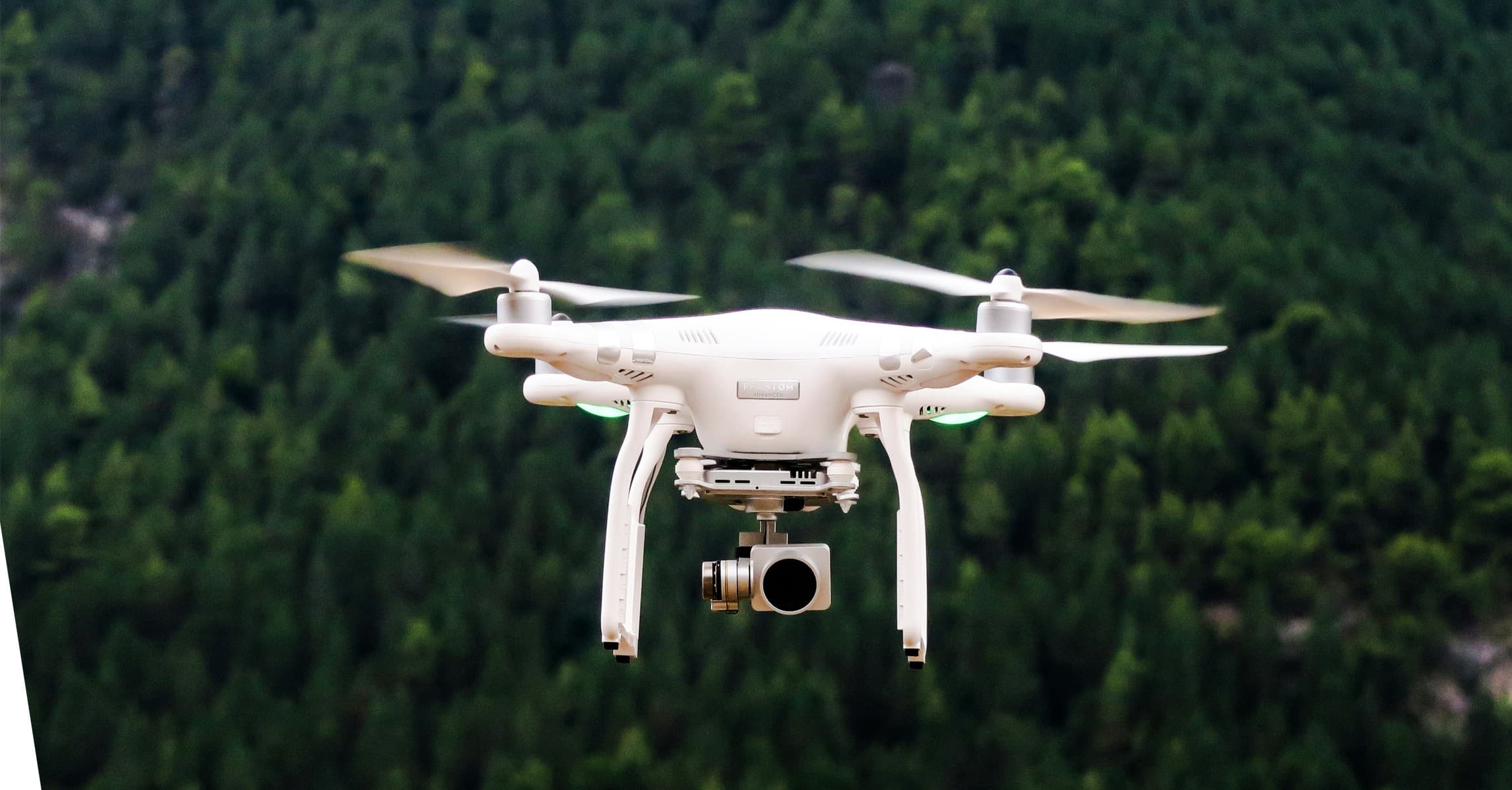
Our approach integrates AI directly into autonomous drone platforms. By combining high-resolution photogrammetry with deep learning models, we can reconstruct detailed 3D terrain models, detect millimeter-scale ground displacement, and classify geological risk zones, all in real time, at a cost that is orders of magnitude lower than conventional LiDAR campaigns. The AI engine processes drone-captured imagery on the fly, triangulating surface changes that indicate potential landslide initiation zones, fault line movements, or soil liquefaction risks.
This technology is particularly transformative for Italy, a country where 91% of municipalities are classified at risk for landslides or flooding. Traditional LiDAR-based monitoring is impractical at this scale. AI-drone systems can cover the same terrain in hours rather than weeks, and can be redeployed rapidly after seismic events to assess damage and guide emergency response, representing a true paradigm shift in geological safety infrastructure.
Core Capabilities
Landslide Detection
AI-powered terrain analysis to identify unstable slopes, soil movement patterns, and early warning indicators before catastrophic events occur.
Seismic Monitoring
Continuous monitoring of ground vibrations and micro-seismic activity using drone-mounted sensors combined with neural network pattern recognition.
Terrain Mapping
High-resolution 3D terrain reconstruction from drone imagery, achieving accuracy comparable to LiDAR at a fraction of the cost.
Risk Assessment
Automated geological risk scoring and hazard zone classification using deep learning models trained on historical disaster data.
AI-Drone Integration
Seamless integration of computer vision and sensor fusion algorithms directly on drone hardware for real-time field analysis.
Regional Monitoring
Scalable monitoring networks covering vast terrains, particularly suited for Italy's diverse and geologically active landscapes.
How It Works
1. Autonomous Drone Survey
Drones equipped with high-resolution cameras and inertial measurement units (IMUs) autonomously survey target areas following pre-programmed flight paths. Multiple overlapping passes ensure comprehensive coverage and stereo reconstruction capability.
2. AI-Powered Photogrammetry
Convolutional neural networks process overlapping drone imagery to generate dense 3D point clouds and digital elevation models. Unlike traditional photogrammetry, the AI can handle challenging conditions like vegetation cover, shadows, and weather variation, producing centimeter-accurate terrain models comparable to airborne LiDAR.
3. Change Detection & Classification
By comparing temporal sequences of terrain models, the AI identifies surface deformation, ground displacement, and emerging fracture patterns. Deep learning classifiers then categorize detected changes into risk levels, from benign seasonal variations to critical pre-failure indicators requiring immediate attention.
4. Real-Time Alert System
When anomalies exceed predefined thresholds, the system automatically generates alerts with geo-tagged risk maps, severity classifications, and recommended response actions, delivering actionable intelligence to geological engineers and civil protection authorities within minutes of data acquisition.
Why Italy Needs This
of municipalities at geological risk
landslides mapped nationally
annual damage from hydrogeological events
cheaper than LiDAR campaigns
Italy's complex geology, from the Alps to the volcanic regions of Campania and Sicily, makes it one of the most hazard-prone countries in Europe. Traditional LiDAR monitoring is prohibitively expensive to deploy at national scale. AI-drone geotechnology provides the same analytical depth at dramatically reduced cost, enabling municipalities and regional authorities to implement continuous monitoring programs that were previously out of reach. This is not an incremental improvement, it represents a generational leap in how we protect communities and infrastructure from geological hazards.
Interested in Collaboration?
We are actively seeking research partners, geological institutions, and municipal authorities to pilot this technology.
Get in Touch →